
Rosetta on The DeFi Drop
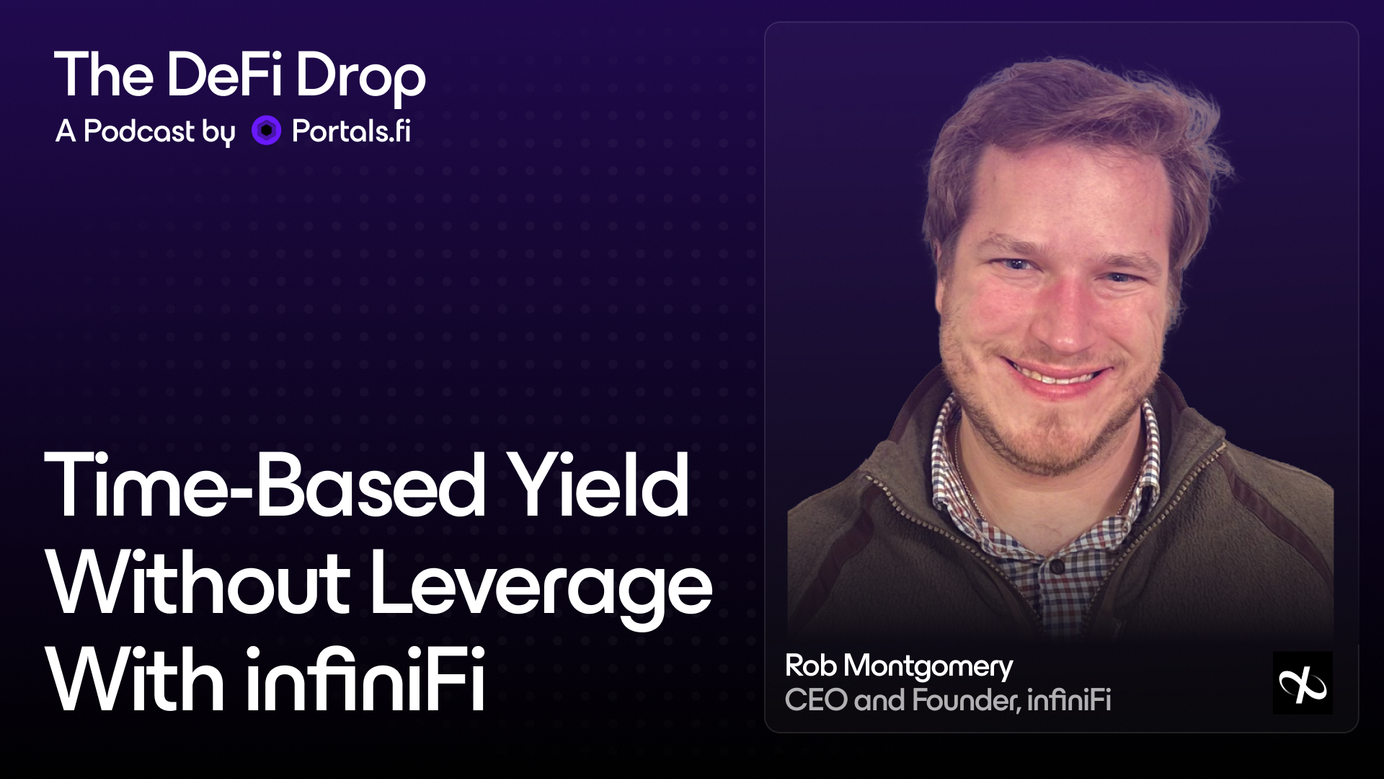
Guest: Emre, founder of Rosetta
Host: Edward Ward, Portals.fi
In this episode of The DeFi Drop, Edward spoke with Emre, founder of Rosetta, to explore how programmable yield infrastructure is evolving on-chain. Rosetta is built natively on Hyperliquid and introduces a new layer of composable, transparent, and policy-driven yield routing. The conversation unpacked how block-level finance, native exchange-EVM design, and verifiable transparency are setting new standards for DeFi infrastructure.
From Parabol to Rosetta: A New Yield Paradigm
Emre’s journey began with Parabol, a maturity-matched, US Treasury–backed digital dollar designed for transparency and real-world yield. But off-chain constraints limited composability and speed. The next step was Rosetta, an on-chain system where yield is no longer a static APY but a granular, auditable flow of capital.
“With Rosetta, if you say you earned 5%, we can show you every micro-event that generated that 5%.” — Emre
Rosetta tracks yield on Hyperliquid block-by-block. Every lending event, funding rate, and position shift becomes a source of verifiable performance. This is yield infrastructure built from first principles: fast, trustless, and transparent.
Why Yield Must Be Measured Block-by-Block
Traditional DeFi yield relies on delayed APY figures. Rosetta introduces a live indexing model across all supported yield venues on Hyperliquid, capturing:
- Lending vault activity
- Funding rate fluctuations
- Position reallocations
This indexing is paired with a policy layer that lets users and integrators define constraints and strategies. Then, Rosetta executes reallocations at specific intervals to keep capital aligned with defined policies.
The result: a yield engine that responds in real time, reduces drift, and gives users full control over how, when, and where capital moves.
Building Natively on Hyperliquid
Hyperliquid’s architecture enables a unique setup. Hypercore (exchange engine) and HyperEVM (smart contract layer) are built to interact seamlessly. Rosetta reads funding rates and market data directly from Hypercore, then executes rebalances on HyperEVM.
“On most stacks, you’d need to bridge from an exchange to an EVM chain just to move capital. It’s clunky. On Hyperliquid, it’s native.” — Emre
This native interaction allows for a new category: core-EVM compositions, where exchange data powers on-chain protocol logic.
Programmable Yield Surfaces
Rosetta’s goal isn’t to chase the highest APY. It optimizes based on programmable policy stacks. In its first version, users can:
- Select specific vaults (e.g. Morpho)
- Set allocation limits and constraints
- Filter by auditor or market source
Rosetta doesn’t impose risk preferences. It surfaces metrics and lets allocators choose. The policy is enforced automatically, producing a predictable, rules-based yield profile.
Radical Transparency
Every action Rosetta takes is recorded and auditable. Allocation logs, reallocation history, and market tail numbers are all on-chain and exposed via the Rosetta frontend.
“Most DeFi transparency today depends on how good you are at using Etherscan or Dune. We want to make everything legible to humans and automated systems alike.” — Emre
For funds, treasuries, and serious allocators, this removes the guesswork. Yield becomes explainable and defensible, not a vague figure on a dashboard.
What’s Next for Rosetta
The Rosetta team is onboarding initial users following internal testing. Integrators are already embedding Rosetta for native programmable yield flows. The development team, the same one behind Parabol, is keeping the stack lean and focused.
“It’s the same team, the same company, but a second-time-founder mindset.”
Over time, Rosetta and Parabol may converge. Parabol provides a user-friendly interface, while Rosetta powers the yield engine underneath.
About Rosetta
Rosetta is a programmable yield layer built natively on Hyperliquid. It indexes on-chain yield venues and executes policy-driven capital routing at block-level resolution. By combining exchange-layer signals with smart contract programmability, Rosetta enables transparent, auditable, and composable yield infrastructure for funds, protocols, and individual allocators. The same team built Parabol, a digital dollar backed by US Treasuries.
About Portals.fi
Portals.fi is a DeFi meta-aggregator that allows users to swap, zap, and bridge into complex positions across chains. Through the Portals Explorer, users can discover curated vaults, lending markets, and cross-chain strategies in a few clicks. Portals also supports DeFi builders through Cross-Chain Apps powered by intent infrastructure.
App | X | Discord | Telegram | Developers | Support
Portals.fi Blog Newsletter
Join the newsletter to receive the latest updates in your inbox.